skip to main |
skip to sidebar
 "in man, nature can be taken in two ways. First, inasmuch as intellect and reason is the principal part of man's nature, since in respect thereof he has his own specific nature [(secundum eam homo in specie constituitur)]. And in this sense, those pleasures may be called natural to man, which are derived from things pertaining to man in respect of his reason [(secundum rationem)]. . . . Secondly, nature in man may be taken as contrasted with reason [(secundum quod condividitur rationi, as distinguished from reason)], and as denoting that which is common to man and other animals, especially that part of man which does not obey reason [(rationi non obedit)]. And in this sense, that which pertains to the preservation of the body, either as regards the individual, as food, drink, sleep, and the like, or as regards the species, as sexual intercourse, are said to afford man natural pleasure. Under each kind of pleasures, we find some that are 'not natural' speaking absolutely [(innaturales, simpliciter loquendo)], and yet 'connatural' in some respect [(connaturales secundum quid)]. For it happens in an individual [(individuo)] that some one of the natural principles of the species [(speciei)] is corrupted, so that something which is contrary to the specific nature [(contra naturam speciei)], becomes accidentally natural to this individual [(per accidens naturale huic individuo)]. . . . And this corruption may be either on the part of the body—from some ailment; thus to a man suffering from fever, sweet things seem bitter, and vice versa—or from an evil temperament; thus some take pleasure in eating earth and coals and the like; or on the part of the soul; thus from custom [(propter consuetudinem)] some take pleasure in cannibalism
 or in the unnatural intercourse of man and beast, or other such things [(in comedendo homines, vel in coitu bestiarum aut masculorum, aut aliorum huiusmodi, in consuming human beings, or in coitus with beasts or males, or others of this kind)], which are not in accord with human nature [(quae non sunt secundum naturam humanam)]."
St. Thomas Aquinas, ST I-II.31.7.Resp. Latin from Corpus Thomisticum. I have followed the entry on "Homosexualité" in the Dictionnaire de philosophie et de théologie thomistes, by Margelidon and Fluocat (2016), in correcting the FEDP translation of that penultimate Latin phraseology. For "aut" doesn't, I think, mean "and" (while the Dictionnaire renders the genitive—as in "bestiarum aut masculorum, aut aliorum"—with "avec," "with"). And, indeed, Eric D'Arcy translates this as follows on p. 25 in vol. 20 of the Blackfriars Summa:
He may be ailing physically. . . . He may be ailing psychologically, as some men by habituation come to take pleasure in cannibalism, or in copulation with beasts or with their own sex, or in other things not in according with human nature.
Most striking, in my view, though, is that distinction between what may be [2] "accidentally natural" to an individual" "in some respect", though [1] "contrary to the nature of the species" or "unnatural, simply speaking", and therefore vicious.
12 October 2021: This, by the way, is said to be the passage upon on which the thesis of Adriano Oliva O.P.'s Amours: l'église, les divorcés remariés, les couples homosexuels (Paris: Le Cerf, 2015) is based. See Thibaud Collin, the five Dominicans (also First things), Carlos A. Casanova, and so forth.
 "following St. Augustine, St. Thomas maintains explicitly
that the image of God in man resides primo et principaliter in the knowledge
and love of God, that is to say, in the participation in the knowledge
and love that God has of his own mystery. The knowledge and love of self constitutes a
secondary aspect of the image of God (secundario), to the degree—and
only to the degree—that the human mind that knows and loves itself is borne
towards God."
"following St. Augustine, St. Thomas maintains explicitly
that the image of God in man resides primo et principaliter in the knowledge
and love of God, that is to say, in the participation in the knowledge
and love that God has of his own mystery. The knowledge and love of self constitutes a
secondary aspect of the image of God (secundario), to the degree—and
only to the degree—that the human mind that knows and loves itself is borne
towards God."
Gilles Emery, "La théologie trinitaire spéculative comme
exercice spirituel suivant saint Thomas d'Aquin," Annales theologici 19,
no. 1 (2005): 127-128 (99-133), citing ST I.93.8, I.93.4, and De veritate 10.7, which see! From the latter, Resp.:
the likeness of the Trinity is clearer in mind, as knowing God, than as knowing itself. Therefore, properly speaking, the image of the Trinity is in the mind primarily and mainly, in so far as the mind knows God, and it is there in a certain manner and secondarily, in so far as the mind knows itself, especially when it considers itself in so far as it is the image of God. As a result, its consideration does not stop with itself, but goes on to God. There is no image in the consideration of temporal things, but a kind of likeness of the Trinity, which can partake more of the character of vestige.
"if it were necessary for followers of voluntary poverty to make their living by manual labor, the result would be that they might take up the greater part of their lives in this kind of work; consequently, they would be kept away from other, more necessary activities [(aliis magis necessariis actionibus)], such as the pursuit of wisdom, and teaching, and other such spiritual exercises [(studium sapientiae, et doctrina, et alia huiusmodi spiritualia exercitia)]. In this way, voluntary poverty would be an impediment to perfection of life rather than a disposition helpful to it."
St. Thomas Aquinas, Summa contra gentiles 3.132.14. Latin checked against Corpus Thomisticum. Cf. ST II-II.22.4.ad 3. I was put onto this by Gilles Emery, "La théologie trinitaire spéculative comme exercice spirituel suivant saint Thomas d'Aquin." Annales theologici 19, no. 1 (2005): 116 (99-133), who says "The study and teaching of wisdom are [for St. Thomas] among the 'spiritual exercises' (spiritualia exercitia) that lead to the knowledge and love of God."
The reference to these "other more necessary activities" echoes almost directly the "unum est necessarium" and the "optimam partem" of Jesus in Luke 10:42 Vulgate.
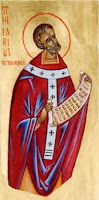 "Penetrate into the mystery, plunge into the darkness which shrouds that birth, where you will be alone with God the Unbegotten and God the Only-begotten. Make your start, continue, persevere [(Incipe, procurre, persiste)]. I know that you will not reach the goal, but I shall rejoice at your progress. For He who devoutly [(pie)] treads an endless road [(infinita)], though he reach no conclusion, will profit by his exertions. Reason will fail for want of words, but when it comes to a stand it will be the better for the effort made."
Hilary of Poitiers, On the Trinity 2.10, trans. Schaff & Wace, NPNF, 2nd ser., vol. 9. Latin from PL 10, col. 58 until I can get to a critical edition. Cf. Simone Weil on attention.
 "pedagogical disputations in schools [are] meant not for removing error but for instructing their hearers so that they might be led to understand the truth; . . . those investigating the root of truth and making known how what’s said is true must rely on [2] reasons; otherwise, if a teacher determines a question with bare [1] authorities, the hearer will indeed be assured that something is so, but he will acquire [(acquiret)] no science or understanding and will go away with an empty head."
Thomas Aquinas, Quodlibet IV.ix.3.Resp., trans. Thérèsa Bonin (with the Latin), italics mine. On "I can explain it to you, but I can't understand it for you," see, for example, The Big Apple.
 "in man, nature can be taken in two ways. First, inasmuch as intellect and reason is the principal part of man's nature, since in respect thereof he has his own specific nature [(secundum eam homo in specie constituitur)]. And in this sense, those pleasures may be called natural to man, which are derived from things pertaining to man in respect of his reason [(secundum rationem)]. . . . Secondly, nature in man may be taken as contrasted with reason [(secundum quod condividitur rationi, as distinguished from reason)], and as denoting that which is common to man and other animals, especially that part of man which does not obey reason [(rationi non obedit)]. And in this sense, that which pertains to the preservation of the body, either as regards the individual, as food, drink, sleep, and the like, or as regards the species, as sexual intercourse, are said to afford man natural pleasure. Under each kind of pleasures, we find some that are 'not natural' speaking absolutely [(innaturales, simpliciter loquendo)], and yet 'connatural' in some respect [(connaturales secundum quid)]. For it happens in an individual [(individuo)] that some one of the natural principles of the species [(speciei)] is corrupted, so that something which is contrary to the specific nature [(contra naturam speciei)], becomes accidentally natural to this individual [(per accidens naturale huic individuo)]. . . . And this corruption may be either on the part of the body—from some ailment; thus to a man suffering from fever, sweet things seem bitter, and vice versa—or from an evil temperament; thus some take pleasure in eating earth and coals and the like; or on the part of the soul; thus from custom [(propter consuetudinem)] some take pleasure in cannibalism


