Friday, November 29, 2013

"how is it consistent with the belief that the church is the body of Christ, a belief I share, to think it has no intrinsic life to be relied on, and must, for the sake of its survival, be fastened to a more vigorous body, that of the nation?"

     Marilynne Robinson, "Wondrous love," Christianity and literature 59, no. 2 (Winter 2010):  212 (202-215), and When I was a child I read books:  essays (New York:  Farrar, Straus and Giroux, 2012), 136 (125-141).
     This oversimplifies, but Robinson is one of those Christian "liberals" with the spirit of whom one would have to be exceptionally churlish to take issue.

Thursday, November 28, 2013

"Always you are there to help me."


In the early hours of the morning, I think of you, O Lord.
     In the early hours of the morning, I think of you, O Lord.
Always you are there to help me.
     I think of you, O Lord.

In matutínis, Dómine, meditábor de te.
     In matutínis, Dómine, meditábor de te.
Quia factus es adiútor meus.
     Meditábor de te.

     Ancient versicle-and-response based on Ps 63:6-7 (62:7-8 in the Vulgate according to the Greek (Septuagint)), as translated by the ICEL for the Liturgy of the hours:

     . . . in matutinis meditabar in te quia fuisti adiutor meus. . . .
     . . . ἐν τοῖς ὄρθροις ἐμελέτων εἰς σέ· ὅτι ἐγενήθης βοηθός μου. . . .

Note how different the wording is in the Vulgate according to the Hebrew as edited by Weber & Gryson:

     . . . per singulas vigilias meditabor tibi quia fuisti auxilium
     meum. . . .
     . . . .בְּ֝אַשְׁמֻרֹ֗ות אֶהְגֶּה־בָּֽךְ׃כִּֽי־הָיִ֣יתָ עֶזְרָ֣תָה לִּ֑י . . .

     The image is a close-up of fol. 60r of the Salzinnes Antiphonal (CDN-Hsmu M2149.L4) of 1554/5, but in CANTUS (at least) manuscripts from as early as the 10th century are listed.

Wednesday, November 27, 2013

Grelot on Jesus in the face of death

"The death of Jesus is not that of Socrates, drinking the hemlock in a calm and impavid fashion:  Jesus suffers fear and anguish in full view of his closest disciples.  This is not the Stoic death of Seneca—opening up his veins—or of Cicero—extending his neck to the executioner—in acceptation of their Destiny.  It is not the death of a disciple of the Buddha, in whom the death of all desire would have prepared [the way for a] tranquil entrance into Nirvana.  It is not the death of a mystic in ecstasy or burning to encounter the God whom he desires (one thinks here of the execution of Hallâj).
     "It is above all the death of a Jew shaped in his comportment by the substance of the Scriptures, expressing in the perspective that they have opened up his faith and his questions ('Why have you abandoned me?'), his anguish and his hope.  The Scriptures are thus accomplished because Jesus assumes them.  But every man can also recognize in him the most intimate depths of his [own] experience, for this is the ineluctable destiny of the sinful humanity that he bore [right through] to the end [(bout)]."

     Pierre Grelot, Dictionnaire de spiritualité, s.v. Mort I. dans l'écriture sainte (t. 10 (1980), cols. 1753-1754).  Cf. St. Leo the Great on the Slave mentality.

"if the whole precedes in the type, then [it] is not in a type, but must be considered a truth of history": Jerome on Julian the Apostate on Hos 11:1/Mat 2:15

"This passage—which, in [his] seventh book, Julian Augustus has vomited forth against us, that is, [us] Christians—he calumniates, and says:  ‘What is written of Israel, the Evangelist Matthew has transferred to Christ, in order that he might make a laughing stock of the simplicity of those who, from among the gentiles [(de gentibus)], had believed.’  To him we shall respond briefly [as follows]:  First, that the Gospel [of] Matthew was brought forth in Hebrew [(Hebræis litteris)], for which reason [(quod) none] were able to read [it] except those who were from among the Hebrews [(ex Hebraeis)].  Therefore he [(i.e. Matthew?)] has not done [this] in order that [(propterea . . . ut)] he might make a laughing stock of gentile [converts (ethnicis)].  But if he [(i.e. Julian?)] did not wish to make a laughing stock of the Hebrews, he was either foolish or ignorant:  foolish, if he has concocted a patent falsehood; ignorant, if he has not understood about whom these things were being said.  That book absolves of [(excusat)] folly which is composed circumspectly and in order; we are not able to call [him (i.e. Matthew?)] ignorant whom from other testimonies of the Scriptures we know to have possessed a knowledge of the Law.  It remains that we say this, that [(illud . . . , quod)] those things that precede in others τυπικῶς [(typologically)] are according to truth and fulfillment referred to Christ:  which [referral] we know [(cognovimus, have learned)] the Apostle effected in the two mountains Sinai and Zion, and in Sarah and Hagar.  For not only is [Mount Sinai] not Mount Sinai, but [Zion] is also not Zion:  [Sarah] was [(PAi3S)] not Sarah, and [Hagar] was [(PAi3S)] not Hagar; because these the Apostle Paul has referred to the two Covenants [(Gal 4:22-26)].  So therefore this [is] what is written:  ‘A child [was] Israel, and I have loved him, and out of Egypt I have called my son’ is assuredly said of the people of Israel, which is called out of Egypt, which is loved, which, after the wandering of idolatry, was, at that time, as if an infant and a child, called [(PAi3S)]:  but is referred in full [(perfecte)] to Christ.  Thus [(Nam)] Isaac was in type of Christ because the latter was himself [(ipse)] to have carried [(portaverit, FpAi3S, will have carried; or PAS3S)] for himself [(sibi)] the wood of future death [(Gen 22:6)], and also Jacob, because [the latter, namely Christ] was to have had [(habuerit, FpAi3S, will have had; or PAS3S) both] Leah afflicted in [(dolentem, grieving)] the eyes, and Rachel the beautiful wife [(Gen 29:17, 23-28)].  In Leah, who was older, we understand the blindness of the Synagogue:  in Rachel, the beauty of the Church; and yet[, with respect to those] who are [(PAi3S)] in part types of [our] Lord [and] Savior, not all things that are said to have happened [to them] must be believed to have happened in type of him [(et tamen qui ex parte typi fuerunt Domini Salvatoris, non Omnia quæ fecisse narrantur, in typo ejus fecisse credenda sunt)].  For the type indicates a part:  because if the whole precedes in the type, then [it] is not in a type, but must be considered a truth of history."

     Jerome, In Osee III.xi.1-2 (CCSL 76, 121 l. 57-122 l. 90), translation mine.  Marc Adriaen, in CCSL 76, glosses the reference to Julian's "seventh book" rather straightforwardly as follows:  Julian the Apostate, Contra Galilaeos VII.  Karl Johannes Neumann, in his reconstruction of the Contra Christianos on the basis of the many fragments quoted by (mostly) Cyril of Alexandria (Ivliani Imperatoris librorvm contra Christianos qvae svpersvnt, Scriptorum Graecorum qui Christianam impugnaverunt religionem quae supersunt 3 (Leipzig:  Teubner, 1880)), treats the question of the position of this fragment in the original on pp. 100, 237, and 240.  Hos 11:1 in the Septuagint:  ἐξ Αἰγύπτου μετεκάλεσα τὰ τέκνα αὐτοῦ; Hos 11:1 at Mt 2:15:  ἐξ Αἰγύπτου ἐκάλεσα τὸν υἱόν μου.

"Hunc locum in septimo uolumine Iulianus Augustus quod aduersum nos, id est Christianos, euomuit, calumniatur, et dicit quod de Israel scriptum est, Matthaeus euangelista ad Christum transtulit, ut simplicitati eorum, qui de gentibus crediderant, illuderet.  Cui nos breuiter respondebimus:  Primum Matthaeum euangelium Hebraeis litteris edidisse, quod non poterant legere nisi hi qui ex Hebraeis errant.  Ergo non propterea fecit, ut illuderet ethnicis.  Sin autem Hebraeis illudere uoluit, aut stultus, aut imperitus fuit; stultus, si apertum finxit mendacium; imperitus, si non intellexit de quo haec dicerentur.  Stultitiam ipsum uolumen excusat, quod prudenter ordinatimque compositum est; imperitum non possumus dicere, quem ex aliis testimoniis scripturarum scientiam  legis habuisse cognoscimus.  Superest ut illud dicamus quod ea quae τυπικῶς praecedunt in aliis, iuxta ueritatem et adimpletionem referantur ad Christum; quod apostolum in duobus montibus Sina et Sion, et in Sara et Agar fecisse cognouimus.  Neque enim non est Sina mons et non est Sion; non fuit Sara et non fuit Agar; quia haec apostolus Paulus ad duo rettulit testamenta.  Sic igitur hoc quod scriptum est:  Paruulus Israel et dilexi eum, et ex Aegypto uocaui filium meum; dicitur quidem de populo Israel, qui uocatur ex Aegypto, qui diligitur, qui eo tempore post errorem idololatriae quasi infans et paruulus est uocatus; sed perfecte refertur ad Christum.  Nam et Isaac in typo Christi fuit quod future mortis ligna sibi ipse portauerit; et Iacob quia Liam dolentem oculos, et Rachel pulchram habuerit uxorem.  In Lia quae maior erat, caecitatem intellegimus Synagogae, in Rachel pulchritudinem Ecclesiae; et tamen qui ex parte typi fuerunt Domini Saluatoris, non omnia quae fecisse narrantur, in typo eius fecisse credendi sunt.  Typus enim partem indicat, quod si totum praecedat in typo, iam non est typus, sed historiae ueritas appellanda est."

Saturday, November 23, 2013

Saturday, November 16, 2013

"he moves on a line, on which did he progress for centuries, he would but be carried further from them, instead of catching them up."

     "Now this, I fear, will seem a hard doctrine to some of us.  There are those, whom it is impossible not to respect and love, of amiable minds and charitable feelings, who do not like to think unfavorably of any one.  And, when they find another differ from them in religious matters, they cannot bear the thought that he differs from them in principle, or that he moves on a line, on which did he progress for centuries, he would but be carried further from them, instead of catching them up.  Their delight is to think that he holds what they hold, only not enough; and that he is right as far as he goes.  Such persons are very slow to believe that a scheme of general education, which puts Religion more or less aside, does ipso facto part company with Religion; but they try to think, as far as they can, that its only fault is the accident that it is not so religious as it might be.  In short they are of that school of thought, which will not admit that half a truth is an error, and nine-tenths of a truth no better; that the most frightful discord is close upon harmony; and that intellectual principles combine, not by a process of physical accumulation, but in unity of idea.
"It is true . . . that youths can be educated at Mixed Colleges of the kind I am supposing, nay at Protestant Colleges, and yet may come out of them as good Catholics as they went in.  Also it is true, that Protestants are to be found, who, as far as they profess Catholic doctrine, do truly hold it, in the same sense as that in which a Catholic holds it.  I grant all this, but I maintain at the same time, that such cases are exceptional; the case of individuals is one thing, of bodies or institutions another; it is not safe to argue from individuals to institutions. . . .
     "I allow all this as regards individuals; but I have not to do with individual teachers in this Discourse, but with systems, institutions, bodies of men.  There are doubtless individual Protestants, who, so far from making their Catholic pupils Protestant, lead  on their Protestant pupils to Catholicism; but we cannot legislate for exceptions, nor can we tell for certain before the event where those exceptional cases are to be found.  As to bodies of men, political or religious, we may safely say that they are what they profess to be, perhaps worse, certainly not better; and, if we would be safe, we must look to their principles, not to this or that individual, whom they can put forward for an occasion.  Half the evil that happens in public affairs arises from the mistake of measuring parties, not by their history and by their position, but by their accidental manifestations of the moment, the place, or the person. . . .  And the case is the same as regards the so-called approaches of heterodox bodies or institutions towards Catholicism.  Men may have glowing imaginations, warm feelings, or benevolent tempers; they may be very little aware themselves how far they are removed from Catholicism; they may even style themselves its friends, and be disappointed it does not recognize them; they may admire its doctrines, they may think it uncharitable in us not to meet them half way.  All the while, they may have nothing whatever of that form, idea, type of Catholicism, even in its inchoate condition, which I have allowed to some individuals among them. . . .  This is why some persons have been so taken by surprise at the late outburst against us in England, because they fancied men would be better than their systems.  This is why we have to lament, in times past and present, the resolute holding off from us of learned men in the Establishment, who seemed or seem to come nearest to us.  Pearson, or Bull, or Beveridge, almost touches the gates of the Divine City, yet he gropes for them in vain; for such men are formed on a different type from the Catholic, and the most Catholic of their doctrines are not Catholic in them.  In vain are the most ecclesiastical thoughts, the most ample concessions, the most promising aspirations, nay, the most fraternal sentiments, if they are not an integral part of that intellectual and moral form, which is ultimately from divine grace, and of which faith, not carnal wisdom, is the characteristic.  The event shows this, as in the case of those many, who, as time goes on, after appearing to approach the Church, recede from her.  In other cases the event is not necessary for their detection, to Catholics who happen to be near them.  These are conscious in them of something or other, different from Catholicism, a bearing, or an aspect, or a tone, which they cannot indeed analyze or account for, but which they cannot mistake.  They may not be able to put their finger on a single definite error; but, in proportion to the clearness of their spiritual discernment or the exactness of their theology, do they recognize, either the incipient heresiarch within the Church's pale, or the unhopeful inquirer outside of it.  Whichever he be, he has made a wrong start; and however long the road has been, he has to go back and begin again.  So it is with the bodies, institutions, and systems of which he is the specimen; they may die, they cannot be reformed."

     John Henry Newman, The idea of a university defined and illustrated, Appendices I:  1852 Discourse V, "General knowledge viewed as one philosophy" (ed. I. T. Ker (Oxford:  Clarendon Press, 1976), 430-434 (419-434)).
     Newman here responds to the suggestion that university instruction in religion can safely treat of "'general religion'" only, i.e., only "just as much as . . . Catholics and Protestants . . . hold in common" (428); a kind of "mere Christianity", as it were.  Interesting, in that light, that C. S. Lewis was never more than one of those "who seemed . . . to come nearest to us".

Friday, November 8, 2013

Running with the buffaloes

     “There was an anchorite in the desert grazing with the buffaloes and he prayed to God, saying:  ‘Lord, let me know if I am falling behind in anything.’  A voice came to him, saying:  ‘Enter this coenobion and, if they tell you to do anything, do it.’  He went into the coenobion and stayed there, but he had no idea how to serve the brothers.  The junior monks began teaching him how to serve, saying:  ‘Do this, idiot; do that, crazy old man.’  Hurt, he began to say to God:  ‘I have no idea how to serve men; release me back to the buffaloes.’  Released by God again, he went to a village to graze with the buffaloes.  Men used to set traps [in which] they caught buffaloes and the elder was caught [in one].  The thought suggested itself:  ‘Put your hand out and release yourself’, to which thought he said:  ‘If you are a man, release yourself then go to the men.  If, on the other hand, you are a buffalo, you do not have hands’, and he stayed in the trap, safe and sound, until dawn.  The men were alarmed on seeing the elder caught when they came to take the buffaloes.  For his part, he said nothing.  They released him and let him go; out he went into the desert, running with the buffaloes.”

     Ἦν τις ἀναχωρητὴς ἐν τῇ ἐρήμῳ βοσκόμενος μετὰ τῶν Βουβάλων καὶ ηὔξατο τῷ Θεῷ λέγων·  Κύριε, ἔι τι ὑστερῶ, δίδαξόν με.  Καὶ ἦλθεν αὐτῷ φωνὴ λέγουσα·  Εἴσελθε εἰς τόδε τὸ κοινόβιον, καὶ εἴ τι ἐπιτάσσουσι σοι, ποίησον.  Εἰσελθὼν δὲ εἰς τὸ κοινόβιον ἔμεινε καὶ οὐκ ἤδει τὴν ὑπηρεσίαν τῶν ἀδελφῶν.  Καὶ ἤρξαντο οἱ μοναχοὶ οἱ μικροὶ διδάσκειν αὐτὸν τὴν ὑπαρεσίαν λέγοντες·  Τοῦτο ποίησον, ἰδιῶτα, καὶ τοῦτο ποίησον, σαλὲ γέρων.  Καὶ θλιβόμενος ἠρξατο λέγειν πρὸς τὸν θεόν*·  †Οὐκ οἶδα τὴν ὑπερεσίαν τῶν ἀνθρώπων·†  ἀπόλυσόν με πάλιν εἰς τοὺς βουβάλους.  Καὶ ἀπολυθεὶς πάλιν ἀπὸ τοῦ Θεοῦ ἀπῆλθεν εἰς χωρίον βοσκηθῆναι μετὰ τῶν βουβάλων καὶ ἔστησαν παγίδας οἱ ἄνθρωποι ἐκεῖ καὶ ἐπίασαν βουβάλια.  Ἐπιάσθη δὲ καὶ ὁ γέρων καὶ λέγει αὐτῶ ὁ λογισμός·  Βάλε τὴν κεῖρα σου καὶ λῦσον σεαυτόν.  Εἴπεν δὲ πρὸς τὸν λογισμόν·  Εἰ μὲν ἄνθρωπος εἶ, λῦσον σεαυτὸν καὶ ὕπαγε πρὸς τοὺς ἀνθρώπους, εἰ δὲ βούβαλος εἶ, οὐκ ἔχεις χεῖρας.  Καὶ ἔμεινεν εἰς τὴν παγίδα σῶος ἕως πρωΐ.  Ἐλθόντες δὲ οἱ ἄνθρωποι πιᾶσαι τοὺς βουβάλους καὶ ἰδόντες τὸν γέροτα πεπιασμένον ἐφοβήθησαν.  Καὶ αὐτὸς οὐκ ἐλάλησεν οὐδέν.  Καὶ λύσαντες αὐτὸν ἀφῆκαν, καὶ ἐξῆλθε τρέχων ὀπισω τῶν βουβάλων εἰς τὴν ἔρημον.

* S:  Κύριον
† C omits Οὐκ οἶδα τὴν ὑπερεσίαν τῶν ἀνθρώπων·

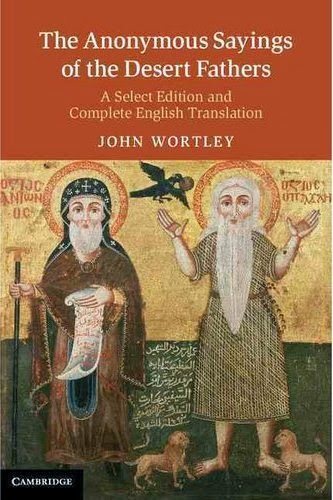
     Anonymous saying of the Desert Fathers no. 516.  The anonymous sayings of the Desert Fathers:  a select edition and complete English translation, ed. & trans. John Wortley (Cambridge:  Cambridge University Press, 2013), 348-351.
     No. 62, on p. 55, is very similar:
     "There was an anchorite grazing with the antelopes [(Βουβάλων)] and he prayed to God saying:  'Lord, teach me in what I am lacking.'  A voice came to him saying:  'Go to such-and-such a coenobion and do whatever they order you.'  He entered the coenobion and stayed, but he did not know how to serve the brothers.  The junior monks started instructing him how to serve the brothers, saying to him:  'Do this, stupid' and:  'Do that, crazy old man.'  Distressed, he prayed to God saying:  'Lord, I do not know how to serve men; send me back to the antelopes again.'  Released by God, he went off again into the countryside to graze with the antelopes [(Βουβάλων)]."
     Why does Worley translate these so differently?  The French translation by Lucien Regnault (Les sentences des pères du désert:  série des anonymes, Spiritualité orientale 43 (Solesmes & Bellefontaine, 1985), pp. 188-189 and 34 respectively) seems more consistent.