Friday, June 11, 2021

Not even Zacharia Lilio

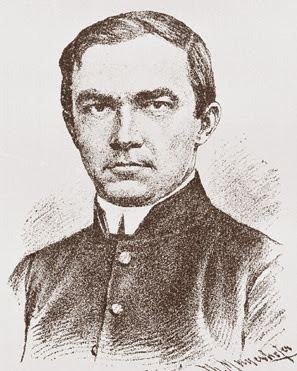
      Contra James J. Allegro, "What was in doubt at the end of the fifteenth century was not the spherical composition of the cosmos, as expounded by Sacrobosco and many others, but the way the two lowermost spheres, of earth and water, were positioned in relation to each other.  In the context of this debate, Zacharia Lilio was a traditionalist who upheld the two-sphere conception against recent attempts to reinstate Ptolemy’s notion of a combined sphere of earth and water, also known as the terraqueous globe.  His stance was still tenable in the year 1496 in so far as the exploratory voyages organized by European maritime powers had not yet brought back news of a large landmass in the 'opposite' part of the world.  The incipient exploration of the coastline of South America in the years 1498-1504, which is associated with names such as Christopher Columbus, Amerigo Vespucci, Pedro Alvarez Cabral, and Gonçalo Coelho, was about to change this.  Allegro is hence right that Lilio adhered to a conception of the earth’s physical configuration that was eventually proven wrong as a result of new empirical data. . . .  The nature of Lilio’s error, however is very different from what Allegro’s essay would have us believe.  [For 'Lilio here, as elsewhere, uses the term terra to denote the habitable landmass'.  He is discussing 'pars nostra terrarium' and not its 'universum circuitum', and for that reason cannot be enlisted in support of the claim that, as Allegro says, 'Europeans were not always united in their spherical earth beliefs'.]
     "James Allegro declined an invitation to respond."


     C. Philipp E. Nothaft, "Zaccaria Lilio and the shape of the earth: a brief response to Allegro’s 'Flat earth science,'" History of science 55, no. 4 (December 2017):  496-497, 496 (490–98), underscoring mine, and James J. Allegro, "The bottom of the universe:  flat earth science in the Age of Encounter," History of science 55, no. 1 (March 2017):  62 (61-85).  Cf. this earlier post, and this one, too.

Sunday, May 30, 2021

Sloth as "the ultimate cause of 'work for work's sake'"

"At the zenith of the Middle Ages . . . it was held that sloth and restlessness, 'leisurelessness', the incapacity to enjoy leisure, were all closely connected; sloth was held to be the source of restlessness, and the ultimate cause of 'work for work's sake'. . . .  the restlessness at the bottom of a fanatical and suicidal activity . . . [was thought to] come from the lack of will to action".

     Josef Pieper, Leisure:  the basis of culture III, par. 1, trans. Alexander Dru ((San Francisco:  Ignatius Press, 2009 [1952]), 43).

Friday, May 28, 2021

"even His infirmity was the consequence of His power."

"cuius et infirmitas fuit ex potestate."

     St. Augustine, City of God xiv.9, trans. Dods.  Latin from CAG (428/83).

Scheeben on metaphysics

"without metaphysics and speculation one cannot treat at all, worthily and exhaustively, things that by their nature belong to the highest metaphysics and at the same time contain the richest, noblest, and most fruitful material for spiritual meditation.  Moreover these same truths are also eminently practical—if not in the colloquial sense that they are immediately related to the usual practices of moral life, then nonetheless in the sense that they contribute mightily to the elevation and edification of the mind and reveal the inmost essence of Christian truth in its beauty and glory."

"ohne Metaphysik und Spekulation kann man nun einmal Dinge, die ihrem Wesen nach der höchsten Metaphysik angehören und die zugleich den reichsten, edelsten und fruchtbarsten Stoff geistiger Betrachtung enthalten, gar nicht in würdiger und erschöpfender Weise behandeln.  Zudem sind eben diese Wahrheiten auch in eminenter Weise praktisch — wenn schon nicht in dem vulgären Sinne, daß sie in unmittelbarer Beziehung zu den gewöhnlichen Uebungen des sittlichen Lebens stehen, so doch in dem Sinne, daß sie zur Erhebung und Erbauung des Geistes mächtig beitragen und das innerste Wesen der christlichen Wahrheit in seiner Schönheit und Herrlichkeit aufschließen."

     Matthias Joseph Scheeben, "Author’s Preface" (1874), Handbook of Catholic dogmatics I.1, trans. Michael J. Miller (Steubenville, OH:  Emmaus Press, 2019).  =vol 1, p. ix in the original 4-vol. German edition (Handbuch der katholischen Dogmatik (Freiburg im Breisgau:  Herder’sche Verlagshandlung, 1873)) on my shelf.

"For an animal such as man, what is natural is affirmed by culture." Or, perversely, not affirmed by culture.

"money and the resurrection are opposed as two systems of possibility:  the system of the virtual and the system of the living.  I am using the word 'virtual' in a very specific [negative] sense that does not encompass all sorts of virtuality or fiction:  there is a good virtuality and even an excellent kind of dreaming that turns us away from reality only to lead us back more deeply into it.  The idea that we would relate immediately and perfectly to existence from the start is the fantasy of people who are sickened by their excessive consumption of artificial things.  For an animal such as man, what is natural is affirmed by culture.  We need myths in order to enter into the logic of the living.  We need fairy tales in order to become realists.  And, in order to reach the soul of reality, we need what at first glance may seem to be a fairy tale but is really the Fact that surpasses all accounting—what may seem to be a myth but is the adventure of the Logos himself:  the News about the Nazarene who died and rose again in Judea during the governorship of Pontius Pilate.
     "What I am calling 'virtual' here refers instead to 'virtual reality,' in other words, to the opposite of myth, poetry, and novels:  a virtuality that tends to substitute itself for reality and to exert its influence over it.  Digital technology is in fact the ultimate stage of cash.  The digitalization of the world through the Internet is the final step in the monetization of the world through money."


     Fabrice Hadjadj, The resurrection:  experience life in the risen Christ, trans. Michael J. Miller (Paris:  Magnificat, 2016;  Résurrection:  mode d'emploi, Paris:  Magnificat, 2016), 41-42.  I'm interested in the claim in the headline (which strikes me as eminently Thomistic), but have set it in context.

Wednesday, May 26, 2021

"The good use the world that they may enjoy God; the wicked . . . that they may enjoy the world would fain use God"

"The good use the world that they may enjoy God:  the wicked, on the contrary, that they may enjoy the world would fain use God [(boni quippe ad hoc utuntur mundo, ut fruantur deo; mali autem contra, ut fruantur mundo, uti uolunt deo)]—those of them, at least, who have attained to the belief that He is and takes an interest in human affairs.  For they who have not yet attained even to this belief are still at a much lower level."

     St. Augustine, City of God xv.7, trans. Dods.  Latin from CAG as reproduced in Past Masters.

Monday, May 24, 2021

"May our hearts dream of you, | May they perceive you in sleep"

Georges de la Tour (detail)
"May our hearts dream of you,
May they perceive you in sleep. . . ."

"Te corda nostra somnient,
te per soporem sentiant, . . ."

May our hearts dream of you,
May they sense you throughout [their] slumber. . . .

     Stanza from the 6th(?)-century hymn Christe precamur adnue (Christe precamur annue) interpolated into the Te lucis ante terminum of Compline in Liturgia horarum.  I must find the time to research the use of this stanza exhaustively.  Cf., for example, this "Oratio in dormitorio," as printed on pp. 223-224 of The Gregorian sacramentary under Charles the Great, as edited in 1915 by H. A. Wilson:

Benedic domine hoc famulorum tuorum dormitorium . qui non dormis neque dormitas qui custodis israhel.  famulos tuos in hac domo quiescentes post laborem  custodi ab inlusionibus fantasmaticis satanę . uigilantes in praeceptis tuis . meditentur dormientes . te per soporem sentient . et hic et ubique defensionis tuę auxilio muniantur . per.

My translation:

Bless, O Lord, this dormitory [(dormitorium:  house of sleep, bedroom)] of the servants [of] your [household], resting in this house after [their] labor, you who neither slumber nor sleep, that keepeth Israel [(Ps 120:4 Douay-Rheims; Vulgate:  non dormitabit neque dormiet qui custodit Israel)].  Protect them from the phantasmic deceits [(illusionibus)] of Satan.  Awake [(uigilantes:  keeping vigil)], may they meditate upon your precepts; asleep, may they sense you throughout [their] slumber.  And may they be, here and everywhere, fortified as within/behind a wall [(muniantur:  walled (round) about, defended)] by the succor [(auxilium:  aid, military auxiliary, troop, or power)] of your defence.

The only problem with this translation is that famulos tuos . . . quiescentes does not match famulorum tuorum in case, as I make it do here.

That last sentence reminds me a lot of the counter-circumvallation of 2 Kings 6:8-23:

So [the king of Syria] sent there horses and chariots and a great army; and they came by night, and surrounded the city. When the servant of the man of God rose early in the morning and went out, behold, an army with horses and chariots was round about the city. And the servant said, 'Alas, my master! What shall we do?'

Etc.

This is also one of the "Benedictiones in monasterio" given in the on p. 277 of The Missal of Robert of Jumièges, as edited in 1896 by the same.  Etc., etc.:

Benedic domine hoc famulorum tuorum dormitorium qui non dormis neque dormitas qui custodis israhel.  famulos tuos in hac domo quiescentes post laborem.  custodi ab illusionibus satanae phantasmaticis uigilantes in praeceptis tuis meditentur.  dormientes te per soporem sentient et hic et ubique defensionis tuae auxilio muniantur.  per.

Etc., etc.
     Cf. this line (which could, I suppose, be entirely eschatological) in the 10th or 11th century Irish hymn "Be thou my vision" ("Rop tú mo baile"), as trans. Murphy (basically Nevin, pp. 42-45 & 190-191):

may it be thou that I behold for ever in my sleep.
rop tú ad-chër im chotlud caidche
.

Cf. the less precise, but better-known Hull versification of 1912:

Thou my best thought by day and by night,
Waking or sleeping, Thy presence my light.