Saturday, October 13, 2018

"a work of Thine own hands, a sheep of Thine own fold, a lamb of Thine own flock, a sinner of Thine own redeeming"

"Into your hands, O merciful Savior, we commend your servant N.  Acknowledge, we humbly beseech you, a sheep of your own fold, a lamb of your own flock, a sinner of your own redeeming.  Receive him into the arms of your mercy, into the blessed rest of everlasting peace, and into the glorious company of the saints in light.  Amen."

     1979 BCP, p. 465, 483, and 499.

1928 BCP ("A Commendatory Prayer when the Soul is Departed"):
Into thy hands, O merciful Saviour, we commend the soul of thy servant, now departed from the body.  Acknowledge, we humbly beseech thee, a sheep of thine own fold, a lamb of thine own flock, a sinner of thine own redeeming.  Receive him into the arms of thy mercy, into the blessed rest of everlasting peace, and into the glorious company of the saints in light.  Amen.
1883:  The book annexed to the report of the Joint Committee on the Book of Common Prayer as modified by the action of the General Convention of MDCCCLXXXIII (New York:  E. & J. B. Younge Co., 1885), 307:
Into thy merciful hands, O heavenly Father, we commend the soul of thy servant, now departing from the body.  Acknowledge, we meekly beseech thee, a sheep of thine own fold, a lamb of thine own flock, a sinner of thine own redeeming.  Receive him into the arms of thy mercy, into the blessed rest of everlasting peace, into the glorious estate of thy chosen saints in heaven.  O most merciful Jesus, that thing cannot perish which is committed to thy charge; Receive, we beseech thee, his spirit in peace.  Amen.
1627:  John Cosin, A collection of priuate deuotions, as reproduced in 1867:
Into Thy merciful hands, O Lord, we commend the soul of this Thy servant, now departing from the body:   acknowledge, we meekly beseech Thee, a work of Thine own hands, a sheep of Thine own fold, a lamb of Thine own flock, a sinner of Thine own redeeming.  Receive him into the blessed arms of Thy unspeakable mercy, into the sacred rest of everlasting peace, and into the glorious estate of Thy chosen saints in heaven.

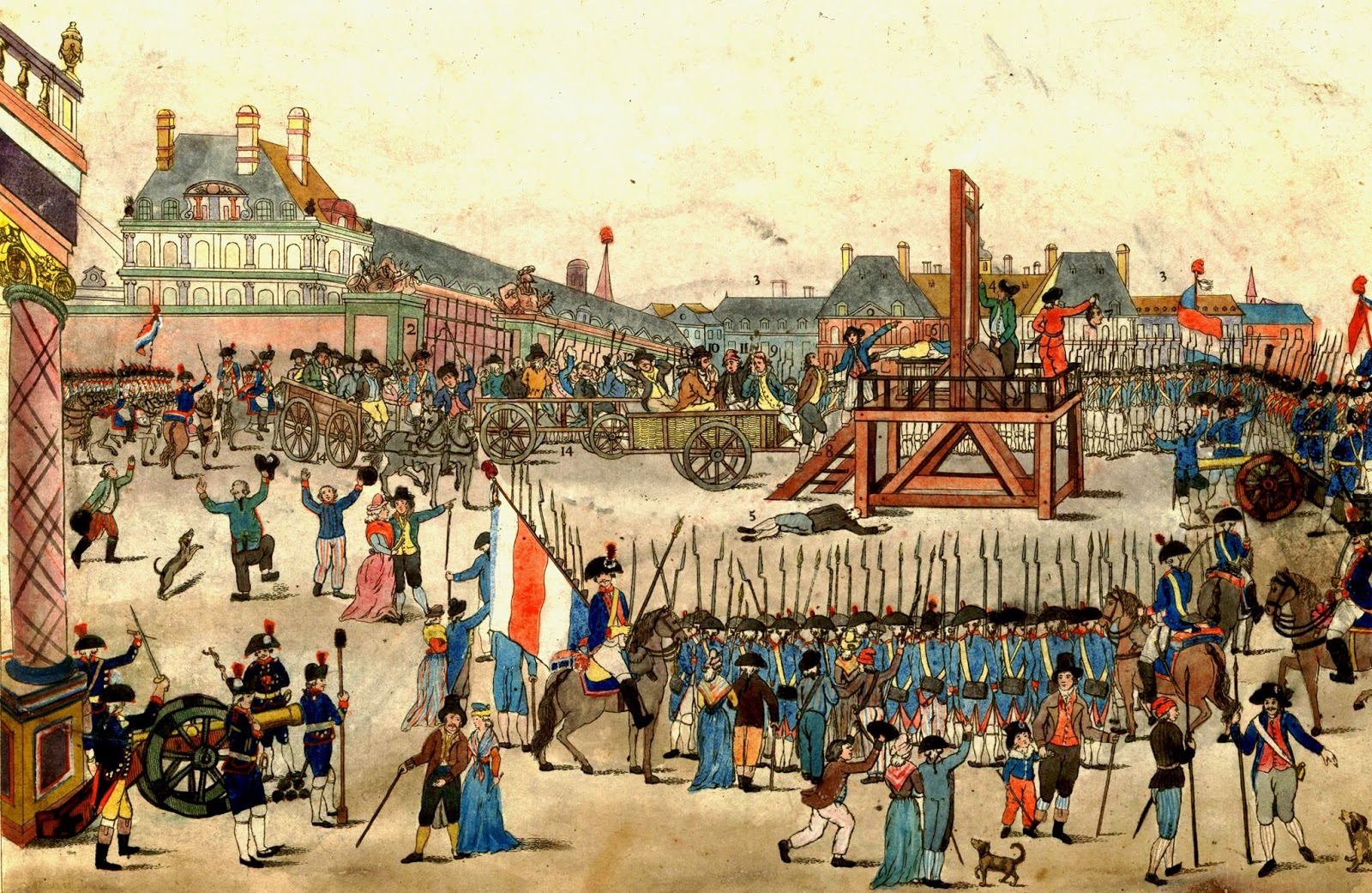
"In the Catholic tradition, it is the dignity of the human person—not its denial—that undergirds the legitimacy of capital punishment."

     Steven A. Long, "Magisterial irresponsibility," First things no. 286 (October 2018):  43 (41-45).  Great article.

Wednesday, October 10, 2018

The pagan "never worries about [the world's] fate because he believes in its eternity."

"The [ancient] pagan regards the world as sacred because it is penetrated by divine presence; he therefore respects it to the point of worshipping it and does no damage to it.  But he never worries about its fate because he believes in its eternity.  He is also unaware of any need for transformation of nature or transcendence of its limitations; the world is good as it stands and possesses in its nature all that is necessary for its survival.
". . . The Christian regards the world as sacred because it stands in dialectical relationship with God; thus he respects it (without worshipping it, since it has no divine presence in its nature), but he regards the human being as the only possible link between God and creation, a link that can either bring nature in communion with God and thus sanctify it; or condemn it to the state of a 'thing', the meaning and purpose of which are exhausted with the satisfaction of man.
     "Paganism sees man as part of the world; the Christian way sees him as the crucial link between the world and God, as the only person in creation that can lead it to survival.  It is the second one that attaches to man responsibility for the fate of creation.  Unless we decide to return to paganism, this second way would appear to be the only way to respect again the sacrality of nature and grapple with the ecological crisis."

     John Zizioulas, "Priest of creation," chap. 24 in Environmental stewardship:  critical perspectives — past and present, ed. R. J. Berry (London:  T & T Clark, 2006):  289-290 (273-290).  The whole essay builds to this summation.  From p. 281:
A Christian who wishes to have both his or her doctrine of creatio ex nihilo and a faith that the world possesses in its nature some kind of means for eternal survival is bound to be logically inconsistent.
On the other "person[s] in creation", i.e. the angels, see p. 277, but especially 286, where only "man, unlike the angels . . . , forms an organic part of the material world, being the highest point in its evolution."

dérapage

Source
"the French scholarly term for the moment when the Declaration of the Rights of Man collapsed into the Terror."

     Mark Bauerlein, citing Richard Bernstein's Dictatorship of virtue:  multiculturalism and the battle for America's future (New York:  Knopf, 1994), in "Hate signs," First things no. 286 (October 2018):  71 (72-71).  Skid(ding), sideslip(ping), slippage, rasp(ing of metal on metal, presumably in conjunction with such a slide), deterioration.  Inflationary spiral:  le dérapage des prix.

Saturday, October 6, 2018

Vita activa

     "Though the charge of temporal affairs seems to be and is distracting, I have no doubt that by your good and upright intention you turn everything you do to something spiritual for God's glory, and are thus very pleasing to his Divine Goodness. The distractions which you accept for His greater service, in conformity with His divine will interpreted to you by obedience cannot only equal the union and recollection of uninterrupted contemplation, but even be more acceptable to Him, proceeding as they do from a more active and vigorous charity. May God our Creator and Lord deign to preserve and increase this charity in your soul and in the souls of all. We correctly hold that any activity in which charity is exercised unto God's glory, is very holy and suitable for us. . . ."

     Ignatius of Loyola, Epistle 2383 to Father Manuel Godin(h)o dated 31 January 1552, trans. Tylenda (?).  =Epistolae et instructiones 4 (Madrid, 1906), p. 127 (126-128).  Cf. the Epistles of 1 June 1551 and 8 June 1555 (Dictionnaire de spiritualité, sv Distractions (vol. 3, col. 1354)).

The trombone (or, rather, Canary-Island sack) as supreme Muse

COme Bacchus, God of Poetry, by right; | Lend me thine influence, whilst now I write. | Thy Sackbut can into my breast inspire | More active heat, than can Apollo's Lire. | He's an Vsurper; and his pow'r a crack, | If we his Helicon compare with Sack. | Lock up that Nectar but a year or two, | And see what all his Hippocrene can do. | That Trough of Pegasus! a pretious grace | To vaunt thus of an Hackney's wat'ring-place!

     Thomas Shipman, "The Canary Islands" (1666), stanza 1 (of 7).  In Carolina, or, Loyal poems (London:  Printed for Samuel Heyrick, at Grayes-Inn-Gate in Holborn, and William Crook, at the Green Dragon without Temple-Bar, 1683), 115.  Viewed in Early English Books Online.  From the OED:
  • Crack:  an empty boast.
  • Helicon:  "a mountain in Bœotia, sacred to the Muses, in which rose the fountains of Aganippe and Hippocrene; by 16th and 17th century writers often confused with these. Hence used allusively in reference to poetic inspiration."  Also:  "An ancient acoustical instrument consisting of strings stretched over a resonance-box and capable of being adjusted to different lengths" (cf. "lire").  (And, ironically, from about 1875, "A large brass wind-instrument of a spiral form", roughly a sousaphone.)
  • Sack:  "a class of white wines formerly imported from Spain and the Canaries."
  • Hippocrene:  "Poetic or literary inspiration; [or] a source of this.  The Hippocrene spring . . . was sacred to the Muses, and its waters were said to imbue the drinker with poetic inspiration."
  • Pegasus:  "Greek Mythology.  The winged horse . .. which is said to have created the fountain Hippocrene, sacred to the Muses, with a stroke of its hoof; (hence) often represented as the favourite steed of the Muses, bearing poets on their flights of poetic inspiration."
     Forget Apollo's lyre.  Imbibe sackbutian fire.

Saturday, September 29, 2018

"Grant us, with Michael, still, O Lord | Against the prince of pride to fight"

Ghirlandaio (15th cent.)
"As often as anything very mighty is to be done, we see that Michael is sent, that by that very thing, and by his name [('Who-is-like-unto-God?')], we may remember that none is able to do as God doeth. Hence that old enemy whose pride hath puffed him up to be fain to be like unto God, even he who said, I will ascend unto heaven, I will exalt my throne above the stars of God. I will be like the Most High [(Is 14:13-14)], this old enemy, when at the end of the world he is about to perish in the last death, having no strength but his own, is shown unto us a-fighting with Michael the Archangel [(Rev 12:7)]".

     St. Gregory I, Homily 34.9 on the Gospels, trans. Divine Office.  CCSL 141, p. 307 =PL 76, col. 1251A.  The headline is from the 17th-century (?) hymn "Te splendor et virtus Patris":
Contra ducem superbiæ | Sequamur hunc nos principem 
Against the duke of pride | May we follow this prince
Trans. Hurst (Gregory the Great:  forty gospel homilies, Cistercian studies series 123 (Kalamazoo, MI:  Cistercian Publications, 1990), 287):
     As often as something requiring wonderful courage is to be done, Michael is said to be sent.  We are to understand from the very action and name [('Who is like God')] that no one can do what is possible to God.  The ancient enemy, who in his pride desired to be like God, said, I will ascend to heaven; above the stars of heaven I will set my throne on high; I will ascend above the heights of the clouds, I will be like the Most High.  At the end of the world, when he is left to his own strength, he is to be destroyed by a most dreadful punishment when he does battle with the archangel Michael.  So John tells us that war broke out with Michael the archangel, so that the one who proudly elevated himself to likeness to God may learn, after he has been destroyed by Michael, that no one can rise to likeness to God by pride.